PUBLIC PLANT DOSSIER · 4 MINUTE READ
Monstera
Monstera deliciosa
A climber with a growing need for space, support and a useful record.
A Monstera dossier begins with its structure. Follow the stem, notice where roots emerge and compare the newest leaves with the older ones. This page complements the Research Room’s care article by helping you make sense of the plant’s shape before deciding that something needs fixing.
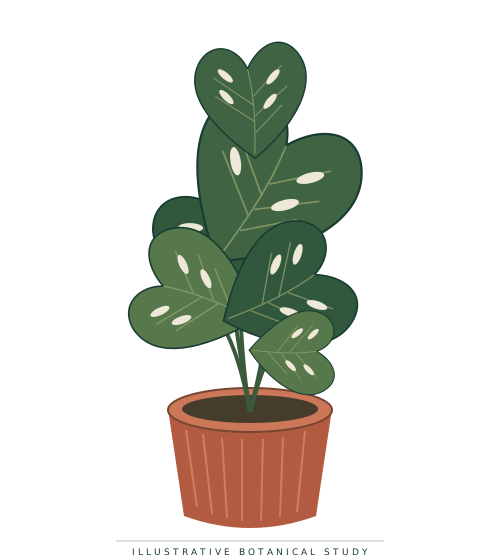
Growth habit
A climbing plant, with aerial roots and leaves that change as it develops.[2]
Light starting point
Indirect light, with the actual exposure checked at the leaves.[1]
Watering question
How far has this pot dried, and can excess water escape?[1]
Sources checked 18 October 2026 (UTC). Source-based general guidance, written with AI assistance. Observation prompts are editorial suggestions. No plant has been assessed from these illustrations, and no horticulturist or veterinary review is claimed.
IDENTIFICATION & SCOPE
The name
and its limits.
This dossier centres on Monstera deliciosa. “Swiss cheese plant” can also refer to other Monstera species, including M. adansonii. A common name or a leaf with holes is not a complete identification. Retain the nursery label and seek clarification when the identity matters to the advice.[1]
Holes and roots can be ordinary business
Young Monstera deliciosa leaves may lack the familiar divisions and holes. As the plant develops, leaf form changes. Aerial roots are part of its climbing habit; they help it attach to support. These features are not, on their own, signs that the owner has failed.[2]
Record which leaves you are comparing. A photograph of a large mature specimen cannot set a deadline for a small plant. If only the latest leaf concerns you, describe its size and form beside the preceding leaf rather than assigning the whole plant a problem label.
Read the support and the pot separately
A substantial Monstera can become top-heavy. Appropriate support and a stable container help accommodate its growth. The RHS cautions against using a much larger pot, because excess mix can remain wet too long.[1]
Stand back and follow the stem to its base. Is the concern a loose support, a pot that rocks, or a stem whose direction has changed? Write each observation separately. Do not assume that every leaning leaf means the roots need more room, or pull the plant into a new shape to match an illustration.
For a plant that is stable, note how the support is attached and whether you can still reach the growing pot. This is particularly useful in a handover: the next person should not have to move a heavy plant merely to discover where the runoff collects.
After a move, inspect the new situation
A lower-light position can reduce growth and water use. The same interval between waterings may therefore behave differently after a move.[3]
Record the move date, the previous position and the present distance from the window. Check the ordinary blind position. If you are investigating a yellow leaf, include the moisture observations and the timeline; the new address is relevant context, not proof of a single cause.
Oliver’s illustrative case file explores that kind of reasoning. Read it to see how reported circumstances shape questions and actions. Its recommendations belong to its stated scenario and should not be copied as a prescription for every Monstera.
Before another care change
Choose one question you can answer without dismantling the plant: whether a new leaf is developing, whether the stem is secure, whether the pot is standing in retained water, or whether the sun reaches the leaves for part of the day. The answer may be to keep a suitable arrangement.
If you do make an adjustment, record its purpose and date. Keep older damage in the baseline photograph so that it is not repeatedly counted as a fresh event. For rapid deterioration, a soft stem or an unstable large plant, get an in-person assessment.
YOUR ACTUAL CIRCUMSTANCES
Three things
to put on record.
- Which species or cultivar is on the label, and is that an owner-reported name or a confirmed identification?
- Which leaves are youngest, and what is the actual concern about their development?
- Can you check moisture and empty the outer pot without straining the stem or moving unsafe weight?
On your observation sheet, keep a whole-plant image and three separate entries: leaf development, structural support and growing conditions. If you do not know the species, write “Monstera reported by owner” or “identity unknown” rather than choosing the nearest-looking photograph. That preserves what is known for the next reader.
Make an observation sheetHOUSEHOLD CAUTIONS
Keep the identity
with the advice.
Monstera deliciosa contains insoluble calcium oxalate crystals and is toxic to cats and dogs. Chewing can cause a painful, irritated mouth, drooling, vomiting and trouble swallowing. Keep it out of reach and contact a veterinarian promptly if ingestion is suspected. Use gloves when handling cut material.[4][1]
Sources on the record
The numbered links attach practical claims to their sources. Observation prompts are editorial suggestions. Overseas calendar months and window directions need interpretation in the plant’s actual setting.
- How to grow Swiss cheese plants
Royal Horticultural Society - Swiss-Cheese Plant, Monstera deliciosa
University of Wisconsin–Madison Extension - Lighting for indoor plants and starting seeds
University of Minnesota Extension - Swiss Cheese Plant
ASPCA Poison Control
Illustration: Original SVG illustration for The Plant Psychology Practice; no third-party image reproduced.