PUBLIC PLANT DOSSIER · 4 MINUTE READ
Snake plant
Dracaena trifasciata
Slow growth, stored water and a handover that allows for no action.
The useful question with a snake plant is often what has actually changed. An upright leaf can remain part of the same quiet arrangement for a long time. Record firmness, the base of the plant, the container and the newest growth before deciding that its unhurried pace requires encouragement.
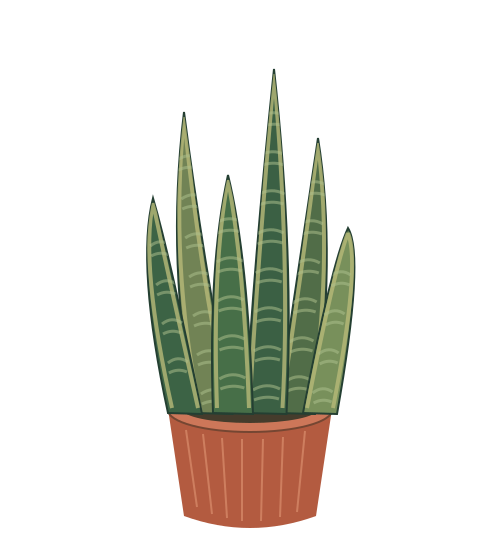
Growth habit
A clump of succulent leaves; established plants can grow slowly.[2]
Light starting point
A bright, lightly shaded position; low-light tolerance is not no-light care.[2]
Watering question
Has the mix dried before you consider adding water?[2]
Sources checked 18 October 2026 (UTC). Source-based general guidance, written with AI assistance. Observation prompts are editorial suggestions. No plant has been assessed from these illustrations, and no horticulturist or veterinary review is claimed.
IDENTIFICATION & SCOPE
The name
and its limits.
This dossier centres on Dracaena trifasciata, previously called Sansevieria trifasciata. Other plants sold as snake plants have different shapes and species names. The older Sansevieria name remains common in care guides. Keep the botanical label so that a cylindrical-leaved or broad “whale fin” plant is not automatically treated as this species.[1]
The leaf stores water, but the pot still matters
Snake plants have fleshy, water-storing leaves and are drought tolerant. The RHS recommends allowing the mix to dry before watering, using good drainage and removing water collected underneath.[2]
Record the growing pot as well as its decorative cover. A narrow container with no visible drainage is a different setup from the nursery pot hidden inside one. If you cannot inspect what is inside, write that down. “The outside looks dry” does not describe the growing mix.
Give this plant its own check rather than watering it because the other pots are being watered. A household record needs a way to say that no action was needed. If the routine is unfamiliar, start by observing the actual mix and clarifying the identity.
A quiet plant is not necessarily a stuck plant
Dracaena trifasciata cultivars include tall, dwarf, twisting and differently marked forms. Some have yellow margins or silvery leaves. Compare the specimen with its own previous growth and confirmed cultivar, not with a different form in a photograph.[1]
Choose a repeatable viewpoint that includes the base of the clump. Record any genuinely new leaves separately from changes in the oldest ones. If there is no clear deterioration, you can retain a stable routine while keeping the record. Faster growth is not always the owner’s aim.
If a leaf leans, describe whether that leaf has bent, the whole clump has shifted or the pot itself is unstable. Those observations call for different questions. Do not force a leaf upright simply to make the photograph resemble a catalogue.
Low light is a tolerance with context
A plant in lower light may grow more slowly and use less water. The tolerance of a dimmer position does not remove the need to inspect that position and the pot’s behaviour.[3]
Note how much of the day the plant is shaded and whether the room stays shut while everyone is away. If considering a brighter position, assess the actual direct sun rather than moving abruptly to the most exposed window. Use the light guide to make a record before changing the arrangement.
Check the reason for repotting
The RHS suggests repotting when the existing container is filled or being distorted, using a pot only modestly larger. Excess spare mix can retain water too long.[2]
Describe the evidence before choosing a bigger container: visible crowding, distortion of the pot or a practical stability problem. You do not need to unpot a settled specimen solely because the date in a general calendar has arrived.
For softening at the base, persistent collapse or rapid change, obtain an in-person assessment. Keep the watering history available, including checks when no water was added. A slow-growing habit should not be used to dismiss clear deterioration.
YOUR ACTUAL CIRCUMSTANCES
Three things
to put on record.
- What name is on the label, and is it this species or another plant sold as a snake plant?
- Is the actual growing mix dry, damp or not yet checked?
- Is the concern a change in one leaf, the base of the clump, the pot’s shape or simply the pace of growth?
On a care-handover sheet, make the decision to skip watering explicit when that follows the owner’s actual check. Record the last action, the current mix and the next person responsible. This protects the plant from repeated well-meant doses without inventing a universal number of weeks it should remain dry.
Make an observation sheetHOUSEHOLD CAUTIONS
Keep the identity
with the advice.
RHS guidance advises keeping snake plants out of reach of children and pets and taking care with irritating sap when handling cut leaves. Do not treat “easy care” as a safety claim. Suspected ingestion by an animal should be discussed with a veterinarian.[2][4]
Sources on the record
The numbered links attach practical claims to their sources. Observation prompts are editorial suggestions. Overseas calendar months and window directions need interpretation in the plant’s actual setting.
- Dracaena trifasciata — Plant Toolbox
NC State Extension - How to grow sansevierias
Royal Horticultural Society - Lighting for indoor plants and starting seeds
University of Minnesota Extension - Do You Know Which Flowers and Plants are Toxic to Pets? Our Experts Explain!
ASPCA Poison Control
Illustration: Original SVG illustration for The Plant Psychology Practice; no third-party image reproduced.