PUBLIC PLANT DOSSIER · 4 MINUTE READ
Pothos
Epipremnum aureum
Follow the vine back to the container before deciding what the leaves mean.
A pothos can occupy a shelf, trail past a window and keep its roots hidden in a decorative pot. Those are several different parts of its situation. Follow the stems back to their base, then describe the whole arrangement before treating one sparse or yellow section as the entire story.
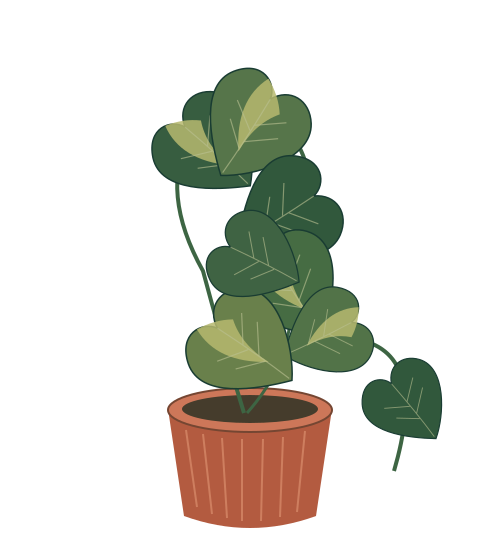
Growth habit
A trailing or climbing vine; indoor plants usually retain juvenile leaf form.[1]
Light starting point
Bright indirect light, with strong direct exposure considered cautiously.[2]
Watering question
Is the mix approaching dryness before you add more?[2]
Sources checked 18 October 2026 (UTC). Source-based general guidance, written with AI assistance. Observation prompts are editorial suggestions. No plant has been assessed from these illustrations, and no horticulturist or veterinary review is claimed.
IDENTIFICATION & SCOPE
The name
and its limits.
This dossier centres on Epipremnum aureum, commonly sold as pothos or devil’s ivy. Older labels may say Scindapsus aureus or E. pinnatum “Aureum”; NC State explains the species distinction. Other plants called pothos are not automatically covered. A heart-shaped leaf alone cannot separate it reliably from every similar houseplant.[1]
A vine is a history you can follow
Pothos climbs using aerial roots. Given suitable support and light, it can develop much larger mature leaves than the familiar small leaves of an indoor trailing plant. Leaf size therefore belongs to a growth history, not a simple owner-performance comparison.[1]
Follow one stem from the pot to its tip. Record where the leaves are concentrated, where gaps occur and which growth is newest. A long bare section and a newly yellow leaf are distinct observations. Do not hide either by selecting only the fullest-looking part for the photograph.
If the plant’s shape is simply inconvenient, state that honestly. “The vine is catching on the cupboard” is a different question from “new leaves are deteriorating”. A request about managing its size does not need a disease explanation.
The leaves and the pot may occupy different conditions
Describe what reaches the leaves along the vine, not only where the pot sits. A trail across a bright opening can end in a shaded corner. Note the blind position and the approximate route of the stems, then keep the description with the whole-plant photograph.
Check the growing pot inside any decorative cover. The RHS advises watering when the mix approaches dryness and avoiding prolonged standing water. A trailing habit does not change the need to know what is happening around the roots.[2]
If the arrangement prevents a routine moisture or drainage check, improve access before elaborating the care plan. In a shared office or household, make clear who will remove the pot, where it drains and who checks next.
A familiar name can conceal a different plant
NC State distinguishes E. aureum from heartleaf philodendron using features including the grooved leaf stalk and the absence of conspicuous free stipules on new growth. These details need a clear view of the stem and new growth; they are not a verdict from a distant leaf outline.[1]
If the nursery label and visible features disagree, retain both pieces of information. An unknown identity belongs at the Observation Desk until clarified. Do not select the nearest dossier just because its watering advice sounds reassuring.
Choose the next observation before the next remedy
For sparse growth, take a repeatable photograph of the same stem and newest tip. For yellowing, record which leaves changed and when. For a routine question, describe the mix at the time of the check. These records make the next discussion more specific without pretending they diagnose a cause.
If you decide to change support, position or care, say which observation justified that choice. Keep the other details legible. If several things must change for a practical reason, record all of them; do not later claim a single adjustment caused the outcome.
YOUR ACTUAL CIRCUMSTANCES
Three things
to put on record.
- Which parts are new growth, and where along the vine does the concern occur?
- What is written on the original label, and do you have a clear view of the leaf stalk and stem?
- Can you reach the actual growing pot and see where drainage water collects?
A useful record includes the whole trailing arrangement, one clear stem junction and a note about the container inside the decorative pot. Keep the supplied identity marked as owner-reported unless it has been appropriately confirmed. If the plant is doing well, use those same observations to explain what is working instead of searching for a problem.
Make an observation sheetHOUSEHOLD CAUTIONS
Keep the identity
with the advice.
Pothos is an aroid that should be kept out of reach of children and pets. Wear gloves when handling or pruning because the sap can irritate skin. For suspected ingestion by a pet, contact a veterinarian rather than using the care dossier to judge exposure.[2][3]
Sources on the record
The numbered links attach practical claims to their sources. Observation prompts are editorial suggestions. Overseas calendar months and window directions need interpretation in the plant’s actual setting.
- Epipremnum aureum — Plant Toolbox
NC State Extension - How to grow epipremnum
Royal Horticultural Society - Do You Know Which Flowers and Plants are Toxic to Pets? Our Experts Explain!
ASPCA Poison Control
Illustration: Original SVG illustration for The Plant Psychology Practice; no third-party image reproduced.