EXAMPLE 02 · ILLUSTRATIVE CASE
Pip.
No complaint has been received.
Chlorophytum comosum
Illustrative synthetic case — not a customer report or testimonial.
AI-written care interpretation and explicitly fictional correspondence.
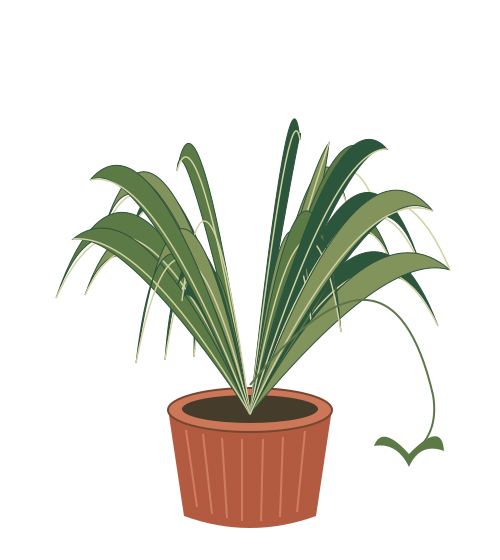
Pip lives on a kitchen shelf, produces new growth, and has six plantlets. The owner is curious whether the offspring mean it is time to buy a larger pot. Nothing in the supplied scenario requires an emergency intervention.
Illustration for this invented case. It is not evidence of a customer plant’s health. Maintenance and curiosity; no problem invented.
OPEN FILE · FOUR PAGES
Read the case.
See what shaped it.
A useful case file can preserve a successful routine. Pip’s six plantlets are a question to explain, not a problem to manufacture.
The complete file: observations, possible explanations, practical priorities and fictional correspondence. Margin notes explain the example; they are not extra care instructions.
PAGE 01 OF 04 · PRACTICAL FILE
A routine, unusually formal check-in
Contents ↑OBSERVED
No customer photograph has been assessed. The illustration shows the intended subject, not a photographic examination. “Healthy” below means the scenario contains no reported deterioration; it is not a comprehensive health clearance.
OWNER-REPORTED
- Called Pip; nursery label says Chlorophytum comosum.
- One year on a stable kitchen shelf with bright filtered daylight.
- New leaves continue to appear. Six plantlets hang over the shelf edge.
- No new yellowing, wilt, visible insects or recent decline.
- Water is given after checking the mix. Excess drains from the inner pot and is discarded.
- The owner likes the trailing shape and does not particularly want more plants.
- No pets or small children can reach this shelf.
THE QUESTION
“Are all the babies a sign that Pip needs more room, or can I leave it alone?” A useful answer should preserve what works and explain what would justify a change.
PAGE 02 OF 04 · PRACTICAL FILE
Ordinary growth, excellent paperwork
Contents ↑POSSIBLE EXPLANATIONS
Plantlets are a normal feature of mature spider plants. Their presence alone is not evidence of illness or a demand for repotting.[Royal Horticultural Society]
Bright indirect light suits spider plants. Lower light is tolerated, but growth may slow.[Royal Horticultural Society]
IMPORTANT UNCERTAINTY
We cannot see roots, the pot size, leaf surfaces or how fast this pot dries. A report of good growth supports a modest maintenance plan; it does not prove there are no hidden issues. There is no reason here to invent a deficiency or a pest.
A DECISION YOU DO NOT NEED TO MAKE TODAY
You do not need to turn six plantlets into six new responsibilities. Keeping the display is a legitimate choice. Propagation is optional.
PAGE 03 OF 04 · PRACTICAL FILE
Three priorities, none dramatic
Contents ↑PRACTICAL ACTIONS
Keep the successful position
Leave Pip in the established filtered-light location while growth remains steady. Avoid moving it into harsh direct sun for the sake of doing something.[Royal Horticultural Society]
Continue checking the mix
Keep the potting medium lightly moist without leaving the pot standing in runoff. Use actual moisture checks rather than a compulsory weekly dose.[Royal Horticultural Society][University of Maryland Extension]
Make repotting evidence-led
If growth declines or the pot is crowded with roots, investigate whether a modestly larger pot is needed. Plantlets alone are not the decision. Rooted plantlets can be potted separately if you want them.[Royal Horticultural Society]
WHAT TO CHECK NEXT
Take a reference photo now. Review the newest leaves and drying pattern in four weeks, or sooner if the plant changes. This timing is a practical record-keeping suggestion, not a biological deadline. Keep a note of whether the shelf position still works as growth extends.
WHEN TO SEEK HELP
If new yellowing spreads, the plant repeatedly wilts, or you find insects or a soft stem, reassess using current photographs and a watering record. A local nursery or qualified horticulturist can examine details a remote report cannot.
PAGE 04 OF 04 · FICTIONAL CORRESPONDENCE
Correspondence from Felix Fern
Contents ↑FELIX’S FICTIONAL CONSULTATION NOTES
Pip attends without a complaint. This has complicated the filing system, which had already prepared a section marked CONCERNS.
The owner does not particularly want more plants. Pip has submitted six smaller Pips for consideration.
Management has asked whether a larger pot would help. Pip has not requested one. The request may have originated in a garden centre.
No escalation is proposed. Pip will remain on the shelf and continue its work. We have left CONCERNS blank.
FICTION, CLEARLY
Felix Fern is a fictional AI botanical correspondent. The dialogue is entertainment, not evidence that a plant has a personality or an opinion about kitchenware.
KEEP THIS PART
Good plant care sometimes means observing a successful routine and leaving it largely alone.
THE PRACTICAL SOURCES
Care references.
The sources support the linked general care claims, not the invented story or a diagnosis. No institutional endorsement or horticulturist review is implied. Follow-up intervals are practical suggestions.
THE COMPLETE OBJECT
Keep the four-page file.
The original PDF contains this same report, including Felix’s fictional correspondence. Reader annotations stay here on the website.
Consultations and gift redemption are not open yet. The Waiting Room, reader and Observation Desk are free to explore.